Current location:首页 > Fish > Morphological Characteristics | Habits | Edible Value | Species Overview of the Tonguefishes
Tonguefishes, also known as “ox tongue fish,” is called “Dab” or “Common Dab”
in English and ‘鳎目鲽’ in Chinese. Common names may vary by region and culture,
but generally include “Sand Dab” and “American Sand Dab”; in the Chaoshan
region, it is also called “shoe sole fish.”
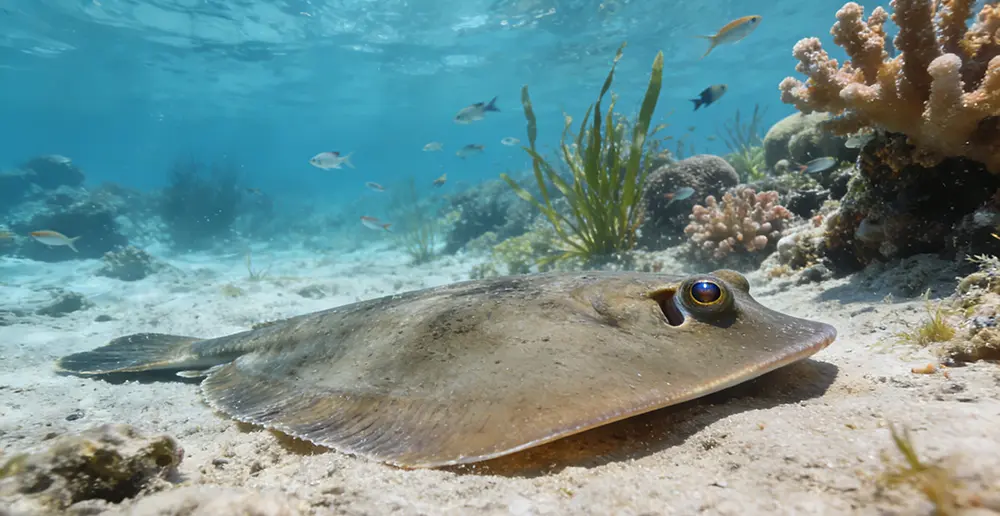
Body Shape: They have a relatively flat body, shaped like an oval or a rhombus.
Body Color: Tonguefishes are typically light brown or gray in color, and may have dark spots or markings on their bodies.
Eyes: Tonguefishes have relatively large eyes located on one side of the body, usually the right side. This allows them to burrow partially into sandy or muddy substrates, exposing only their eyes to hunt.
Fins: They possess a dorsal fin and a ventral fin, as well as pectoral, anal, and caudal fins.
Flounder are demersal fish that primarily inhabit seabed areas with sandy or muddy substrates. They have a wide distribution and typically live in shallow waters, though they can also be found in deeper waters. Flounder feed on small benthic organisms, insects, and small fish. They often burrow into the substrate, waiting for prey to approach before swiftly capturing it.
Flounder has tender, delicate flesh with a delicious flavor, making it suitable for various cooking methods, such as grilling, frying, boiling, and stewing. They are a popular ingredient in some regions, particularly in European seafood cuisine.
Tonguefishes is a fish belonging to the family Pleuronectidae within the order Pleuronectiformes. This family includes several close relatives of Tonguefishes and other similar flatfish.
There are numerous species of Tonguefishes , and multiple subspecies and varieties may exist in different regions. Some common species of Tonguefishes include the European dab and the American Tonguefishes .
Tonguefishes are bottom-dwelling fish prized for their delicious flesh and commonly used in seafood dishes. One of their distinctive features is their asymmetrical eyes, with one larger eye positioned on one side of the body, allowing them to effectively hide in sandy or muddy substrates while observing potential prey.
The seasonal appearance and activity of Tonguefishes depend on their distribution and behavioral habits. Here are some general observations:
1. Summer: In some regions, Tonguefishes may be easier to find during the summer. During this season, as water temperatures rise, they may migrate to shallower waters to forage for food and reproduce.
2. Spring: Spring is also a season when Tonguefishes may be active. As temperatures rise, they may move from deep-water areas to shallower waters to begin feeding and breeding.
3. Fall: Fall is typically the breeding season for flatfish. They may gather at spawning grounds, which are usually located in warmer waters.
4. Winter: In some regions, winter may be a season when flatfish become less active. Cold water temperatures may cause them to slow down and reduce their food intake.
The seasonal activity and migration patterns of flatfish vary depending on their distribution. They inhabit waters of varying depths, ranging from warm subtropical waters to the cold waters of the North Atlantic. The optimal times for observation and fishing generally depend on local climate and oceanic conditions and must comply with local fisheries regulations and conservation measures to ensure their sustainable protection and utilization.
Physical Characteristics, Habits, Edible Value, Species Overview, and Seasonality of the Blue Whale
Home Back to ColumnPhysical Characteristics of Sea Bream | Habits | Edible Value | Species Overview
 Swordfish: The Silver Blade of the Ocean
 Hardhead Catfish Decoded: Morphology, Habits, Edible Value, Varieties, and Timing
 Oysters: Living Filters of the Ocean
 On the Bamboo Clam: Morphology, Burrowing Habits, Edible Value, Species Diversity, and Seasonal Occu
 Comprehensive Study of the Giant Tiger Prawn (Penaeus monodon) in Indonesian Waters
Comprehensive Study of the Giant Tiger Prawn (Penaeus monodon) in Indonesian Waters
Oysters: Living Filters of the Ocean
Oysters: Living Filters of the Ocean
 A Comprehensive Analysis of the Indonesian White Prawn (Penaeus merguiensis)
A Comprehensive Analysis of the Indonesian White Prawn (Penaeus merguiensis)
4Glass Catfish Unveiled: Morphological Traits, Daily Life, Ornamental Appeal, Strains, and Seasonal C
5Red Cod| Rockfish | Rosefish: Biology and Sustainable Utilization of a Deep-Sea Delicacy
6Physical Characteristics of the Checkerboard Wrasse | Habits | Edible Value | Varieties | Seasonalit
7Physical Characteristics of Sea Bream | Habits | Edible Value | Species Overview
8Moray eel | Eels—Muraenidae: The Secret Predators of the Abyss
9Bluefin Tuna: Biology and Fisheries Value of a Tropical Oceanic Wanderer
10Silver Cod Essentials: Form, Living Behavior, Taste, Types, and Peak Seasons