Current location:首页 > Fish > Bluefin Tuna: Biology and Fisheries Value of a Tropical Oceanic Wanderer
Bluefin Tuna: Biology and Fisheries Value of a Tropical Oceanic Wanderer
Bluefin tuna (*Thunnus orientalis*), also known as Pacific bluefin tuna or black tuna, is a large, highly migratory fish found in the temperate to tropical waters of the North Pacific. It is a bony fish belonging to the genus *Thunnus* in the family Scombridae of the order Perciformes. It is a fast-swimming, temperate pelagic fish inhabiting the upper and middle water layers, exhibiting highly migratory behavior and a tendency to form schools. Its diet consists of fish, cephalopods, and crustaceans. The spawning grounds for the North Pacific population are the waters off southern Japan to the Philippines (spawning season: April–July) and the Sea of Japan (spawning season: July–August). Atlantic spawning grounds are located in the Mediterranean Sea (spawning season: June–August) and the Gulf of Mexico (spawning season: May–June). Since this species is distributed in the eastern Pacific, it is also known as the Eastern Bluefin Tuna.
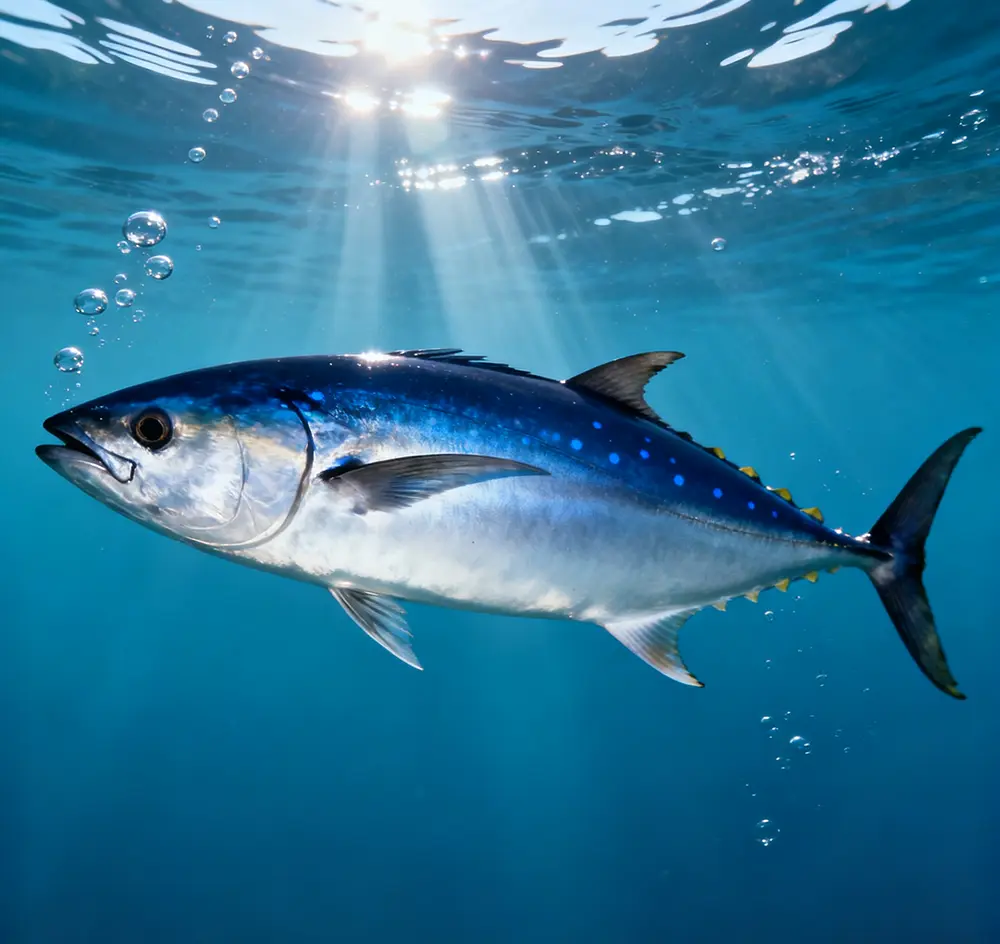
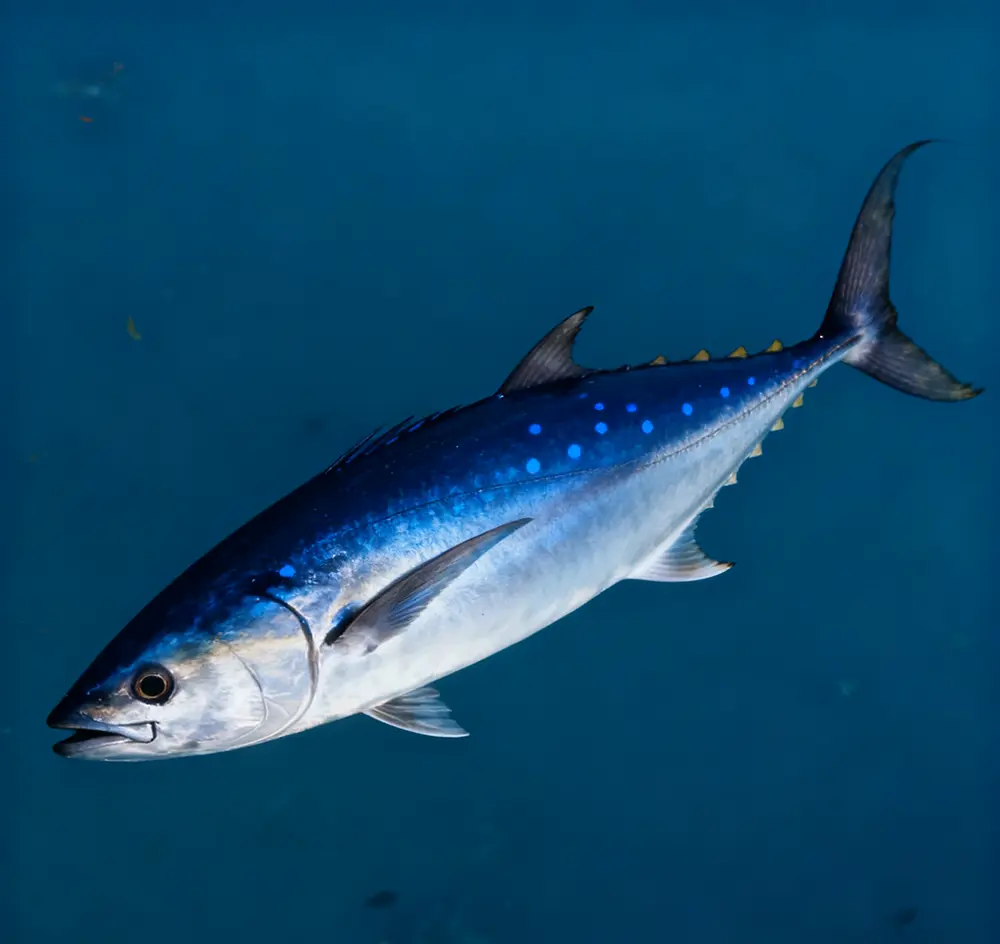
The body is typically spindle-shaped with a length-to-width ratio of 4.8:1. The skin surface is covered by a 0.3 mm thick drag-reducing mucus layer containing hydrophobic glycoproteins. There are 8–10 keel-like projections on each side of the caudal peduncle, which reduce turbulence losses during high-speed swimming by 35%.
The caudal fin is crescent-shaped, covering 25% of the total body surface area, with its base connected to a tendon bundle up to 1.2 meters long. Red muscle accounts for 40% of the muscular system, and the mitochondrial density within muscle fibers is six times that of ordinary fish, supporting sustained cruising.
The eyes and brain contain a counter-current heat exchange network (retia mirabilia), which maintains brain temperature 15°C above water temperature through close contact between arterial and venous blood. The liver accounts for 7–12% of body weight and maintains visceral temperature through heat production via glycolysis.
Compared to yellowfin tuna, its thermal regulation is more efficient: it can maintain a core body temperature of 28°C even in 10°C cold water, enabling it to dive to depths of 1,000 meters to hunt.
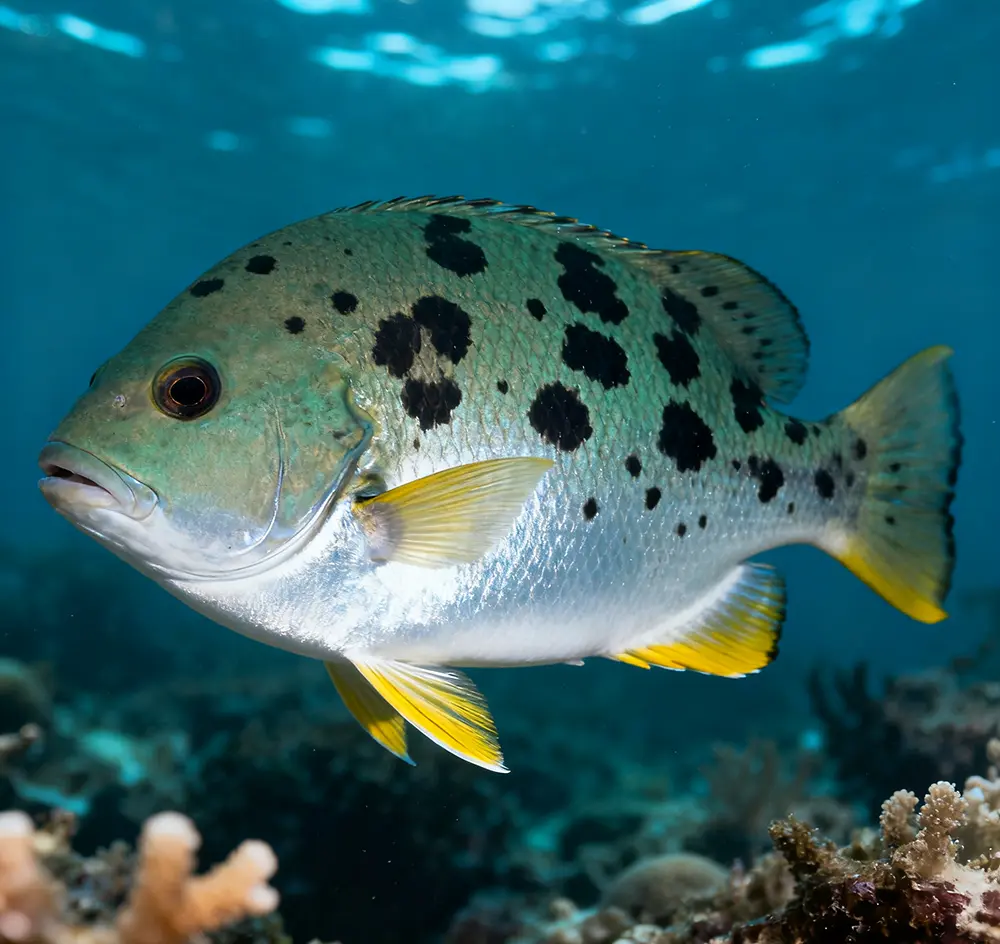
The second dorsal fin and anal fin are bright yellow, and juvenile fish have 10–15 vertical pale stripes along their sides. Adult fish have a steel-blue back, a silvery-white belly, and pearl-like fluorescent spots scattered along the sides.
The lateral line system can detect temperature gradients as small as 0.005°C. The retina contains four types of cone cells capable of distinguishing between 450 nm blue light and 520 nm green light, with an effective visual range of 15 meters even at depths of 600 meters.
The North Pacific population exhibits complex migratory routes: juveniles hatch along the Japanese coast and drift eastward with the Kuroshio Current; 2–3-year-old individuals cross the Pacific to the waters off California; adults return to Japanese coastal waters to spawn. Satellite tracking has recorded a maximum daily migration distance of 300 kilometers.
Navigation relies on magnetic sensing: Magnetite crystals in the cranial cavity are arranged in a chain-like array, enabling the detection of changes in the Earth’s magnetic field as small as 50 nT. Lunar phases influence vertical migration: On full moon nights, they typically remain in waters shallower than 200 meters, while on new moon nights, they descend to depths of 800 meters.
Schools typically consist of 50–200 individuals, employing a “rotating ball formation” tactic to encircle and hunt sardine schools. Outer-ring individuals swim at high speeds of 70 km/h to create eddies, while central members break through to feed. Stomach contents analysis reveals that squid accounts for 55% of their diet, with small fish comprising 35%.
Compared to longfin tuna, their stomach capacity is 30% larger, but their digestion rate is 20% slower, adapting to the high-energy demands of deep-sea hunting strategies.
Spawning grounds are concentrated in waters stretching from the Ryukyu Islands of Japan to the Philippines, where water temperatures must remain stable between 24–28°C. Females spawn in batches, releasing 5–10 million buoyant eggs (1.2 mm in diameter) per spawning event, with up to 10 spawning events occurring throughout the breeding season.
The yolk is rich in DHA (25% of total composition), and larvae begin feeding on copepods at 3 days old. The growth curve follows an S-shape: reaching 60 cm/5 kg at 1 year of age and exceeding 200 cm/150 kg at 5 years of age. Maximum lifespan is approximately 20 years, though commercially caught individuals rarely exceed 10 years of age.
Fat content peaks at 25% in winter, with a notable proportion of functional lipids: omega-3 PUFAs account for 40% of total fatty acids (EPA 15%, DHA 25%), and vitamin D₃ content is approximately 30 IU/g. Heme iron concentration is 5 mg/100 g, which is 2.5 times that of beef.
Special Risk Warning: Large individuals (>200 kg) may accumulate methylmercury (up to 0.5 ppm); pregnant women are advised to consume no more than 100 grams per week.
Japan’s “ultra-low-temperature flash-freezing” requires cooling to -60°C within 45 minutes of capture, with ice crystal size controlled to within 15 μm. Fish processed using the traditional “single-line fishing” method experience a slower decline in muscle pH, maintaining freshness for up to 72 hours.
Mediterranean salting process: First, the fish is wet-cured in a 15% brine solution for 24 hours, then transferred to a 30% brine solution for maturation over three months. Compared to Atlantic bluefin tuna, its flesh has a more uniform fat layer but coarser muscle fibers.
Heart tissue is used to extract coenzyme Q10; a 98% pure product is valued at $200 per gram. Fish bladders are dried using a 28-day gradient drying process to produce “fish maw,” which contains up to 85% collagen. Vascular endothelial growth factor (VEGF) from the gills is used in pharmaceutical research and development.
EU regulations: Livers are prohibited from processing and consumption due to high levels of polychlorinated biphenyls (PCBs > 0.8 ppm). Fish roe products must be labeled with a histamine warning, and the salt content must not be less than 22%.
The stock in the Northwest Pacific is at 60% of its historical peak, with the average body length of the spawning stock declining from 220 cm in the 1980s to 180 cm today. The East Pacific stock is even more endangered, with current biomass at less than 10% of its original level.
International Regulations: The Western and Central Pacific Fisheries Commission (WCPFC) has set an annual quota of 28,000 metric tons and a minimum catch size of 100 cm (corresponding to 3-year-old fish). Japan enforces a fishing ban during the spawning season (closing waters off Okinawa from May to July).
Purse seine vessels are equipped with acoustic deterrent devices: emitting 3 kHz pulsed sound waves reduces dolphin bycatch by 90%. Longline fishing has switched to round hooks, reducing the rate of accidental ingestion by sea turtles by 75%. Marine Stewardship Council (MSC) certification requires seabird bycatch rates to be below 0.01 individuals per 1,000 hooks.
Breakthroughs in aquaculture trials: Kinki University has achieved full-cycle cultivation, but the feed conversion ratio (FCR) reaches 20:1, and costs are five times those of wild capture.
Japanese waters: October–December—feeding and fattening period (peak fat content)
California waters: June–August—northward migration period (firm muscle texture)
Philippine waters: February–April—pre-spawning storage period (rich in flavor compounds)
“Winter Tuna” specifically refers to fish caught in Hokkaido during winter: at this time, the subcutaneous fat layer reaches up to 5 cm in thickness, and the marbling is distinct. Fish caught in summer are more suitable for canning or fish floss.
Sashimi-grade standards:
- K-value (freshness indicator) < 8%
- pH 6.0–6.3
- Eye lens light transmittance > 90%
Frozen Product Identification:
- Ship-frozen products exhibit dense muscle fiber arrangement
- Land-frozen products commonly show ice crystal damage
- Thawing exudate should be <3%
Temperature Tolerance Range:
- Bluefin tuna: Optimal range 10–30°C
- Atlantic bluefin tuna (*T. thynnus*) has an optimal temperature range of 5–28°C
Growth Efficiency:
- Atlantic bluefin tuna of the same age weigh 20% more
- However, bluefin tuna reach sexual maturity one year earlier
Vertical Distribution:
- Bluefin tuna are mostly found at depths of 0–500 meters
- Albacore tuna (*T. alalunga*) often dives to 800 m
Feeding differences:
- Surface-dwelling fish account for 60% of bluefin tuna stomach contents
- Albacore primarily feeds on deep-sea cephalopods (70%)
As a top predator in the North Pacific, the bluefin tuna has evolved a sophisticated thermoregulatory system and highly efficient locomotive organs to support its transoceanic migration strategy.
Its streamlined body and crescent-shaped caudal fin enable high-speed cruising, while a counter-current heat exchange network ensures physiological activity in cold-water zones. Its life history exhibits regular rhythms: equatorial spawning aligns with plankton peaks, and lunar phases guide vertical migration. Its culinary value lies in the combination of omega-3 fatty acids and heme iron, though consumers should be aware of heavy metal risks associated with larger individuals. Current stock status is critical, with the Northwest Pacific population at only 60% of historical levels, necessitating strict quota enforcement and spawning ground protection. Compared to closely related species, it occupies a mid-to-upper water column niche, with a broader temperature tolerance range than Atlantic bluefin tuna and shallower feeding depths than longfin tuna. Consumers should choose MSC-certified products and avoid catches during the spawning season (May–July); during processing, ultra-low-temperature freezing should be used to preserve flavor compounds. Future sustainable use depends on breakthroughs in aquaculture technology and international management cooperation, particularly stringent crackdowns on illegal, unreported, and unregulated (IUU) fishing.
Exercise physiology: Block et al. *Nature* 434: 1121–1127
Nutritional Composition: NOAA Fisheries Commercial Species Database
Stock Assessment: ISSF Tuna Stock Status Update 2023
Heat Exchange Mechanisms: Graham & Dickson, *Comparative Biochemistry and Physiology* 138: 405-429
Aquaculture Technology: Kinki University Annual Report (2022)
Bycatch Control: WCPFC CMM 2022-01
Visual Research: Fritsches et al. *Current Biology* 15: R403-R404
Mercury Risk Advisory: US FDA/EPA Joint Advisory (Revised 2022)
Swordfish: The Silver Blade of the Ocean
Home Back to ColumnMoray eel | Eels—Muraenidae: The Secret Predators of the Abyss
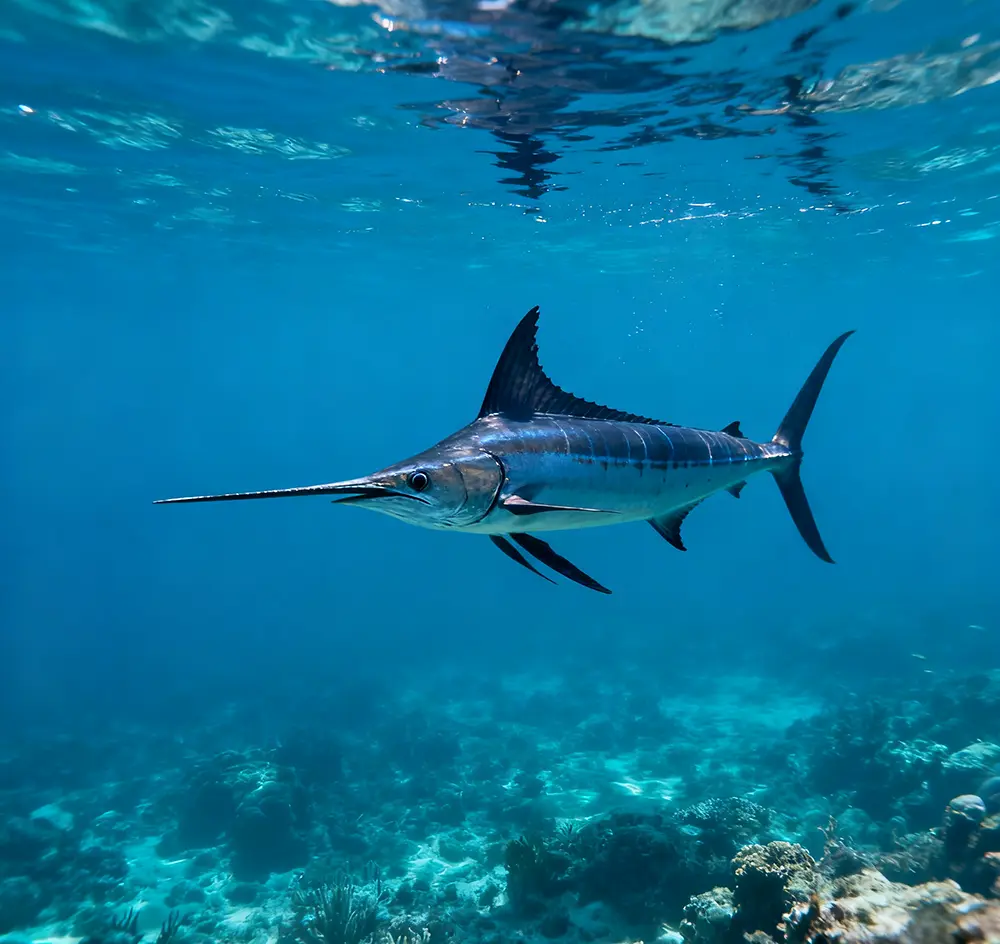 Swordfish: The Silver Blade of the Ocean
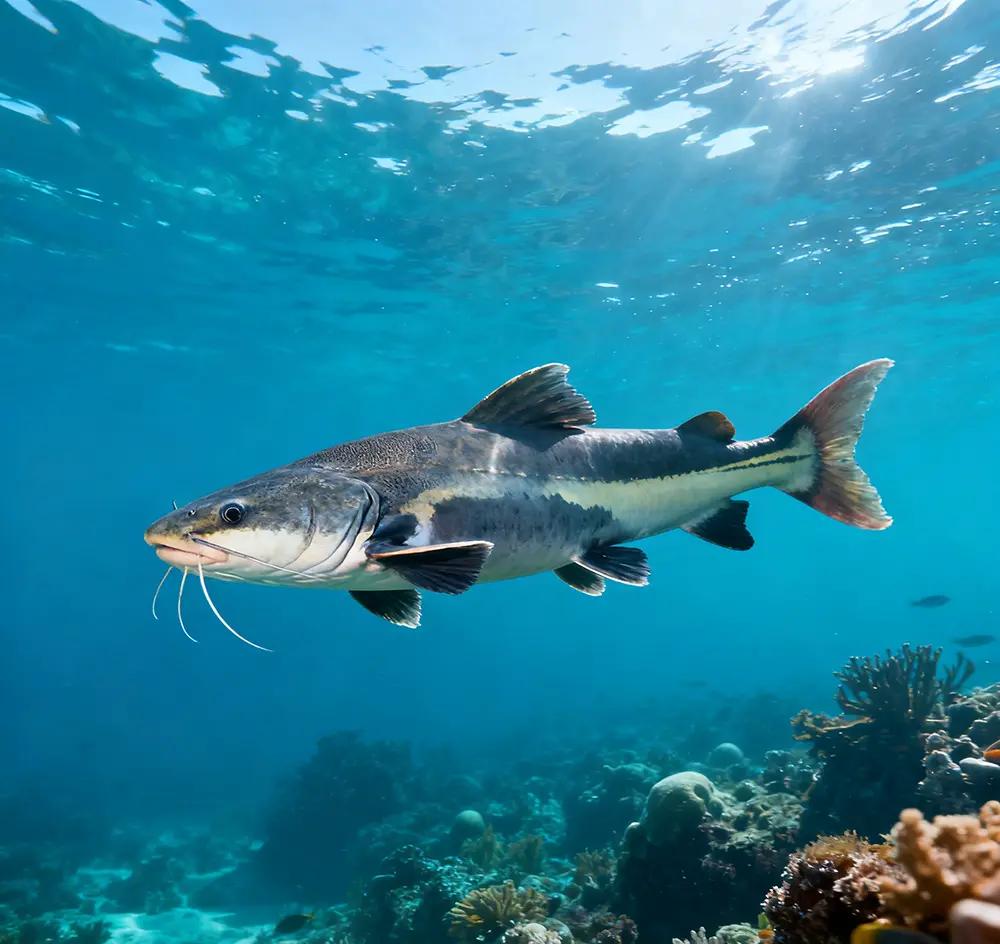 Hardhead Catfish Decoded: Morphology, Habits, Edible Value, Varieties, and Timing
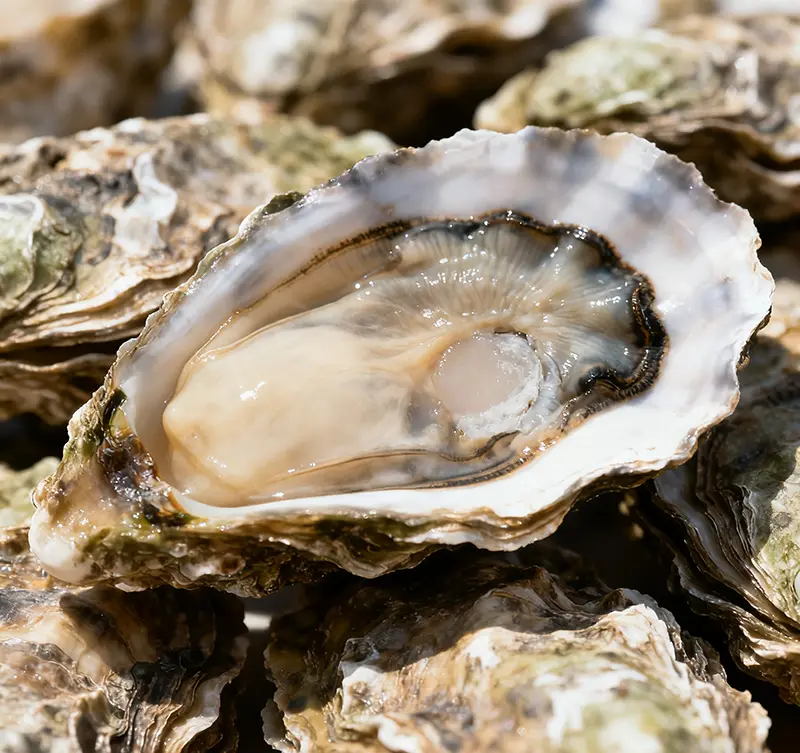 Oysters: Living Filters of the Ocean
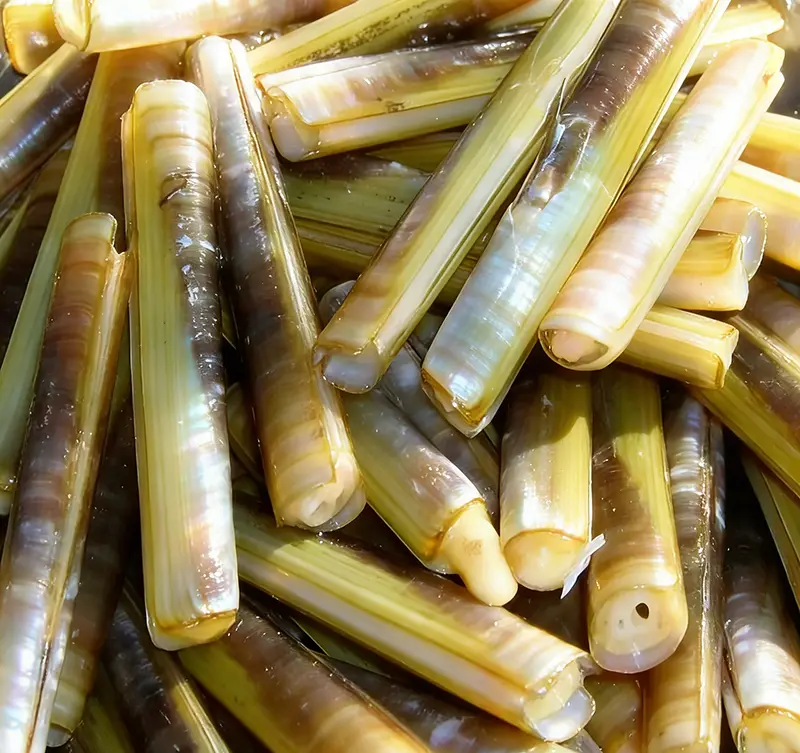 On the Bamboo Clam: Morphology, Burrowing Habits, Edible Value, Species Diversity, and Seasonal Occu
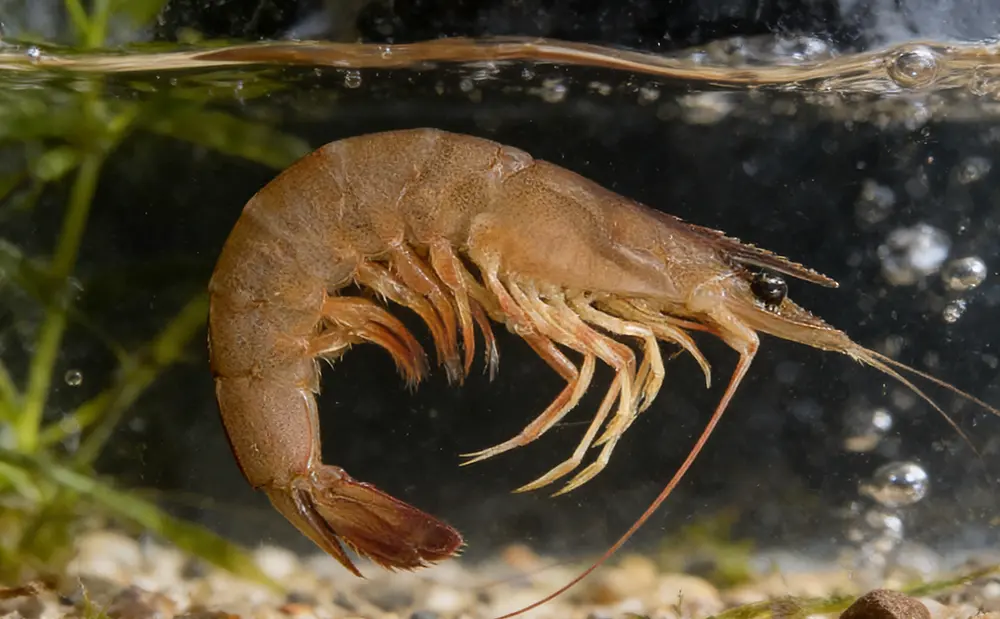 Comprehensive Study of the Giant Tiger Prawn (Penaeus monodon) in Indonesian Waters
Comprehensive Study of the Giant Tiger Prawn (Penaeus monodon) in Indonesian Waters
Oysters: Living Filters of the Ocean
Oysters: Living Filters of the Ocean
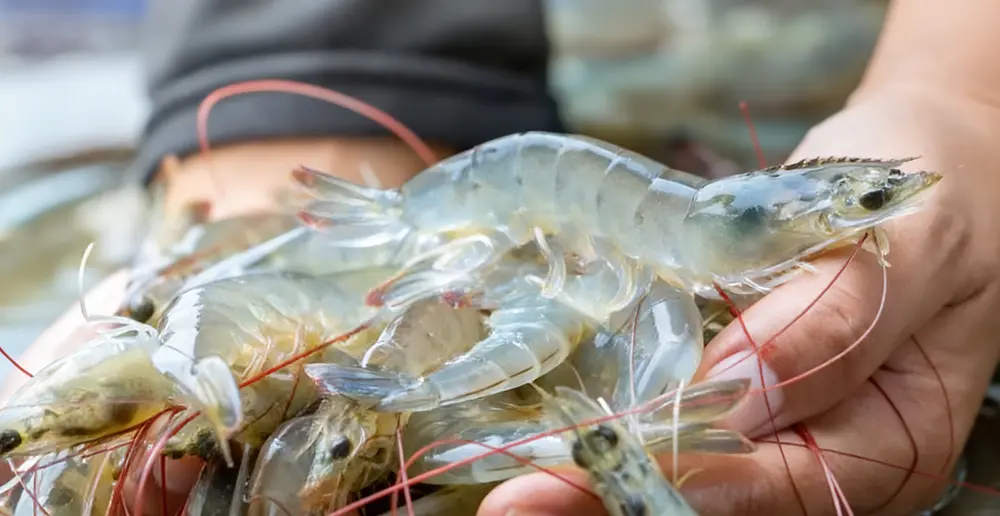 A Comprehensive Analysis of the Indonesian White Prawn (Penaeus merguiensis)
A Comprehensive Analysis of the Indonesian White Prawn (Penaeus merguiensis)
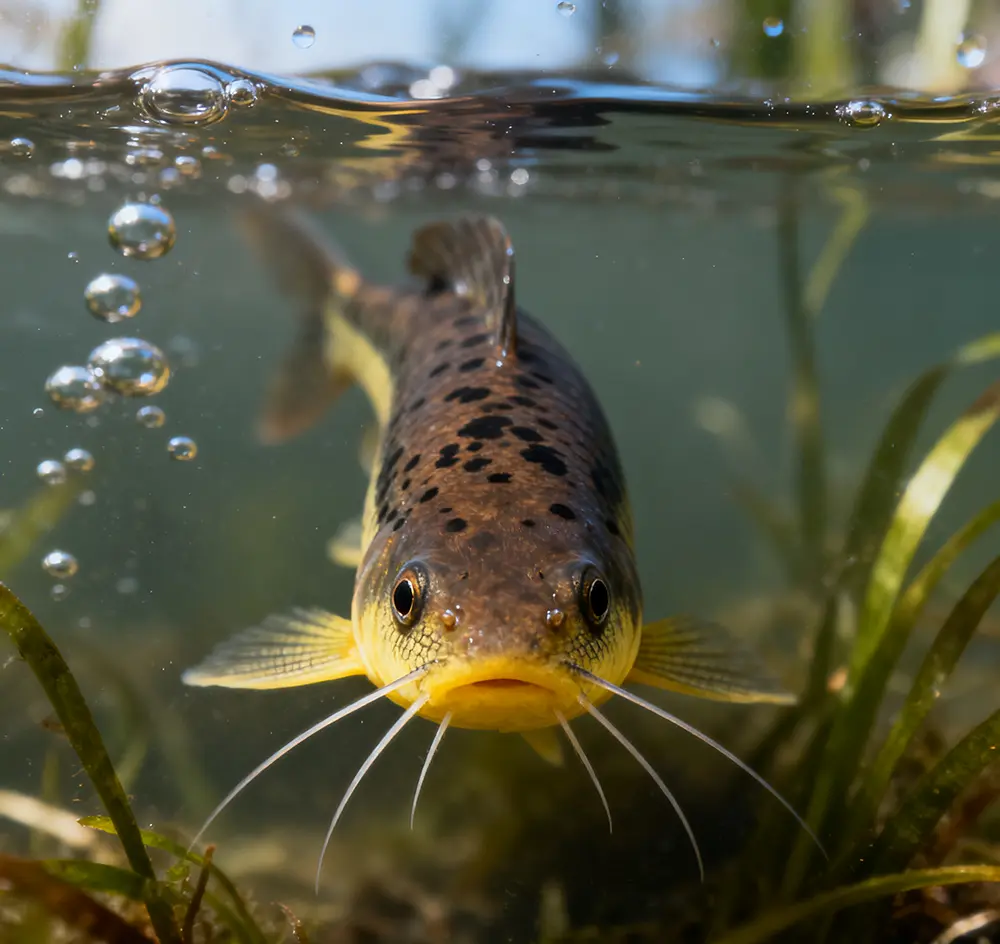
4Glass Catfish Unveiled: Morphological Traits, Daily Life, Ornamental Appeal, Strains, and Seasonal C
5Red Cod| Rockfish | Rosefish: Biology and Sustainable Utilization of a Deep-Sea Delicacy
6Bluefin Tuna: Biology and Fisheries Value of a Tropical Oceanic Wanderer
7Physical Characteristics of the Checkerboard Wrasse | Habits | Edible Value | Varieties | Seasonalit
8Physical Characteristics of Sea Bream | Habits | Edible Value | Species Overview
9Moray eel | Eels—Muraenidae: The Secret Predators of the Abyss
10Silver Cod Essentials: Form, Living Behavior, Taste, Types, and Peak Seasons