Current location:首页 > Fish > Red Seabream | Gaji Fish | Copper Basin Fish | 真鲷: Physical Characteristics | Habits | Edible Value
The red seabream (真鲷, *Pagrus major*), also known as Gaji fish or Copper Basin fish, is a species belonging to the genus *Pagrus* within the family Sparidae. Commonly known as “Gaji” or “Red Seabream” in East Asia, it is a key species within the Sparidae family that holds both ecological and economic significance. It is primarily distributed in India, Japan, the Philippines, and the western coast of Oceania. It is found along the entire Chinese coastline, with larger populations in the Yellow Sea and the Bohai Sea.
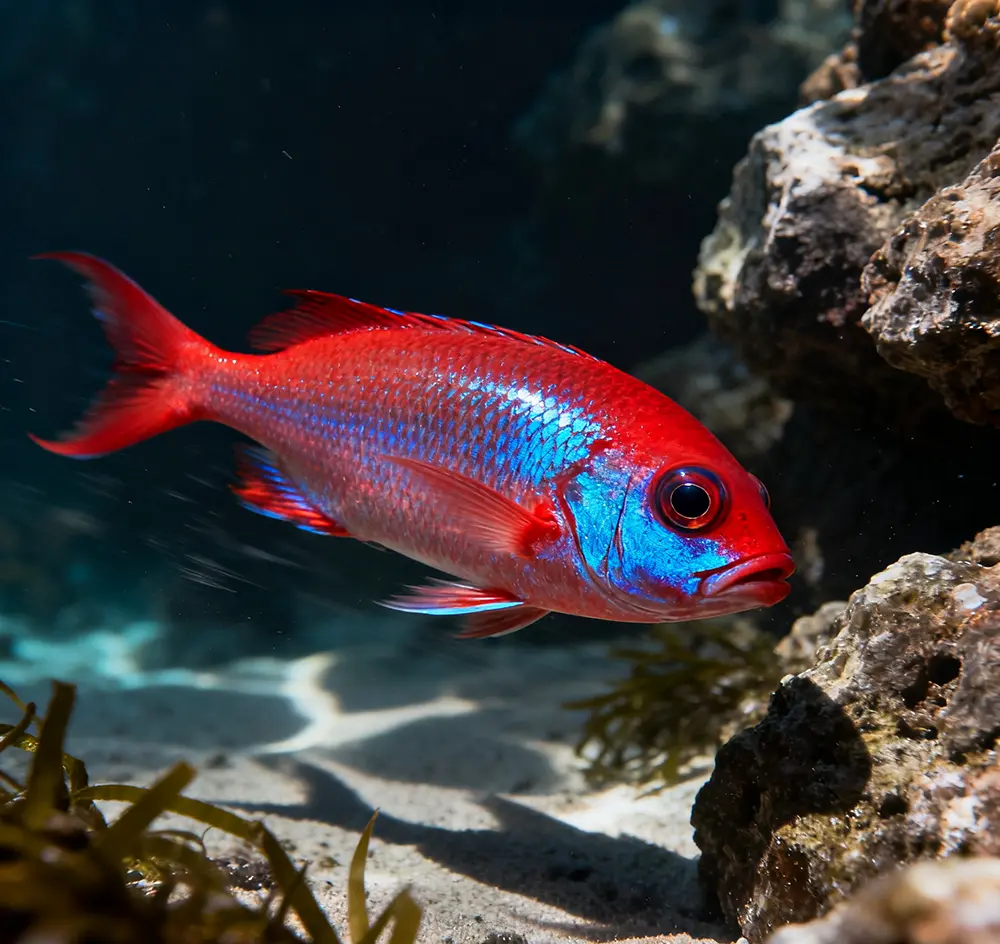
The characteristic rose-red hue of adult red seabream stems from astaxanthin-lipoprotein complexes in the dermis layer of the skin. This pigmentation dynamically changes with habitat depth: individuals in waters shallower than 20 meters exhibit a pinkish tint, while those captured at depths of 80 meters appear deep crimson. This serves as adaptive camouflage against the attenuation of light in deeper waters.
The 4–5 vertical dark bands distributed along the flanks of juvenile fish serve a critical survival function. When schools move through rocky reef areas, these stripes perfectly mimic the shadowed outlines of seaweed, making it difficult for predators to lock onto their targets. The blue fluorescent spot at the base of the dorsal fin is particularly prominent during the breeding season, reflecting 390 nm ultraviolet light to serve as a courtship signal.
Biomechanical analysis of the skull reveals that its jaw lever system can generate a biting force of up to 300 N. The oral cavity features a three-tiered dentition: the six canine teeth at the front are used to pierce crustaceans; the molars in the middle have grinding surfaces capable of crushing oyster shells; and the pharyngeal tooth plates further process hard fragments.
Compared to its close relative, the black sea bream, the true sea bream possesses a more complex pharyngeal dentition—the tooth crowns feature radial enamel ridges, increasing the efficiency of shell crushing by 40%. This specialization allows it to occupy an ecological niche dominated by benthic, hard-shelled organisms.
The lateral line organs form a dense sensory network in the head: the infraorbital canal branches into seven subcanals, with 12 nerve papillae per millimeter, capable of detecting minute water flow changes of 0.1 mm/s. This sensitivity allows it to detect prey movement even in turbid waters.
The visual system possesses spectral resolution advantages: the central region of the retina is densely populated with long-wavelength cone cells (peak at 565 nm), specialized for recognizing the red pigment in the exoskeletons of shrimp and crabs; the peripheral region is enriched with short-wavelength cells (peak at 425 nm), enhancing contrast in deep-water environments.
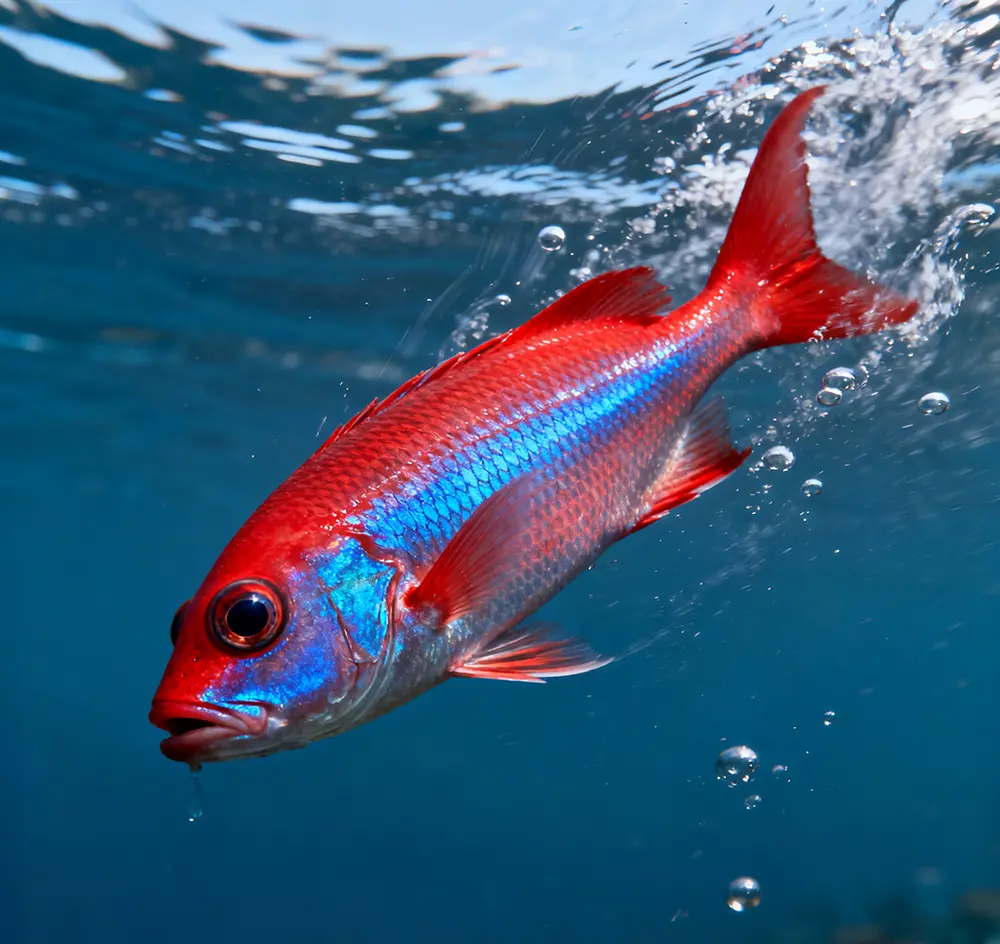
The life cycle exhibits a regular pattern of habitat transition: planktonic larvae disperse with ocean currents; juveniles measuring 2–5 cm in length congregate in seagrass beds, using the vegetation for shelter from predators; subadults exceeding 15 cm migrate to sandy-muddy substrates; and sexually mature individuals (typically at three years of age) ultimately settle in rocky reef cave systems.
In Japan’s Seto Inland Sea, adult fish have been observed feeding in sync with tidal rhythms: they enter mangrove forests to prey on fiddler crabs during high tide and return precisely to the main channel 20 minutes before low tide. This behavior is regulated by the CLOCK gene, and the rhythm persists even under laboratory conditions.
A latitudinal gradient exists during the spring spawning season: the Kyushu population begins spawning in March, while the Hokkaido population delays spawning until June. Spawning grounds are strictly selected in upwelling areas (such as around the Goto Islands), where nutrient upwelling ensures plankton blooms.
The spawning ritual is highly ritualized: males use their caudal fins to dig pits 50 cm in diameter into the sandy seabed; females then release clusters of adhesive eggs (20,000–150,000 per release); males simultaneously fertilize the eggs and use their pelvic fins to fan sand over them. The entire process lasts 40 minutes, with a success rate three times higher than that of random spawning.
Red seabream have poor tolerance to low temperatures (mortality rates surge below 10°C), but exhibit exceptional heat tolerance. They maintain feeding activity even at 32°C, thanks to the efficient expression of the heat shock protein HSP70—under high temperatures, HSP70 mRNA levels in the liver increase 12-fold, maintaining the stability of the enzyme system.
Their overwintering behavior is unique: the population aggregates into multi-layered ball formations in warm current frontal zones (such as the convergence zone between the Tsushima Warm Current and the Kuroshio Current), with juveniles in the outer layer and adults in the inner layer, reducing heat loss by 30% through skin contact. The rightward shift of the hemoglobin oxygenation curve at high temperatures ensures efficient tissue oxygenation.
The core of meat flavor lies in the synergy of flavor compounds: In autumn and winter, inosine monophosphate (IMP) content reaches 250 mg/100 g, three times that of summer; prior to spawning, glutamic acid and glycine together account for 38% of free amino acids, forming a strong umami foundation.
Fat composition exhibits seasonal fluctuations: fish caught in December have a subcutaneous fat layer 1.5 cm thick, with omega-3 fatty acids accounting for 35% of the total (DHA 22%, EPA 9%). The characteristic aroma compound trans-2-nonenal peaks on the third day of chilled storage, imparting a distinctive “seaweed-like fragrance.”
Japan’s “Ikadate” (live-slaughter) method is key to preservation: a specially designed iron skewer is used to puncture the foramen magnum and sever the medulla oblongata, followed by immediate gill laceration and bleeding. This method slows ATP degradation by 6 hours and maintains muscle pH above 6.8, preventing texture hardening caused by postmortem rigor mortis.
The Saikyo-yaki process relies on precise fermentation: Aspergillus oryzae protease in white miso acts for 72 hours at 4°C, breaking down myosin to produce umami peptides with molecular weights of 800–1,500 Da. Compared to steamed grouper, red sea bream must be covered with pork caul fat to supplement lipids and prevent the meat from becoming tough due to high-temperature steaming.
Fish heads, accounting for 35% of body weight, are rich in Type I collagen: after 6 hours of hydrolysis with papain at 60°C, moisture-retaining peptides with a molecular weight of 3,000 Da can be obtained, with a yield of up to 18%. Purine crystals extracted from fish scales are used in high-end pearlescent pigments; products with 99% purity sell for over $200 per kilogram.
Important warning: The liver accumulates fat-soluble contaminants; EU regulations limit weekly consumption to no more than 100 grams. Fish roe products carry a risk of histamine poisoning; during processing, salt content must be maintained above 18% and potassium sorbate added to inhibit bacterial growth.
Two major ecotypes exist in the northwestern Pacific: the Sea of Japan population has a streamlined body shape (body height-to-length ratio of 0.35) and migrates over 500 kilometers annually along the Tsushima Warm Current; the South China Sea population has a larger body height (0.42) and is predominantly sedentary in reef areas. Genetic analysis indicates that the two diverged approximately 800,000 years ago, with mitochondrial DNA differences reaching 4.7%.
Among farmed strains, “Sakura Sea Bream” was bred from wild specimens in Nagasaki, with sexual maturity occurring as early as two years of age; “Hikari Sea Bream” is a triploid variety with a 40% increase in growth rate. Otolith microstructure is the key identifier: wild individuals exhibit uneven annual ring widths (0.5–3 μm), while farmed individuals display uniform 1.2 μm bands.
The Japanese sea bream itself is not listed as a threatened species, but the Australian rose seabream (*Pagrus auratus*)—a member of the same genus—has been assessed as Near Threatened (NT) by the IUCN due to overfishing. At spawning grounds on Japan’s Shima Peninsula, a comprehensive fishing ban is enforced from April to June each year, with fines of up to 5 million yen for violations.
Consumers are advised to select mature individuals with a body length >30 cm (the size at first sexual maturity is 25 cm). High-end alternative species include: farmed yellowtail (18-month growth cycle) or North American red bass (MSC-certified with stable stock levels).
The term “Sakura Sea Bream” specifically refers to female fish in the spring before spawning: when the ovaries account for 18% of body weight, astaxanthin accumulated in the liver transfers to the muscle tissue, giving the flesh a cherry-pink hue. When prepared as sashimi at this time, one can experience the unique, buttery texture of the gonads.
In contrast, “Momiji Sea Bream” in the fall, due to vigorous feeding, accumulates mesenteric fat up to 1.2 cm thick. Fishermen in Kyushu assess fat content by the transparency of the gill covers: a semi-translucent appearance indicates peak fat content, making salt-grilling the best method to bring out the smoky aroma.
Live fish are transported using progressive anesthesia: eugenol concentration is gradually increased from 5 ppm to 20 ppm, reducing metabolic rate by 60% and allowing for a transport density of up to 40 kg/m³. Key control points include: dissolved oxygen in water >6 mg/L, and ammonia nitrogen concentration <0.1 mg/L.
Grading standards for chilled products are stringent: Premium-grade products require a corneal curvature ≥1.5 (plump eyes), gill hemoglobin >8 g/dL (vivid red color), and a mucus pH of 6.8–7.2 (no rancidity). For frozen products, the K-value (ATP degradation indicator) must be tested; for ship-frozen products, it must be <10%.
In mixed-habitat waters, vertical stratification is evident: red sea bream occupy the 0–30 m water column, while black sea bream prefer the 30–60 m depth zone. Stomach content analysis shows that crustaceans (primarily krill and porcelain crabs) account for 65% of the red sea bream’s diet, whereas the black sea bream’s diet consists mainly of polychaetes (45%) and bivalves (30%).
Their spawning periods are cleverly staggered: Black sea bream spawn 4–6 weeks later than true sea bream, thereby avoiding competition for food among juveniles. There are significant differences in salinity tolerance: True sea bream cease growth at salinities below 20‰, while black sea bream can survive in brackish water as low as 5‰. <>
Yellowtail snapper (*Acanthopagrus latus*) exhibits greater thermal adaptability: at 34°C, Na+/K+-ATPase activity in gill filaments remains at 80% of baseline levels, enabling its expansion into tropical estuaries.
A comparison of scale structures reveals that the posterior margin of the ctenoid scales in true sea bream has 12–15 serrations, whereas yellowtail sea bream has only 8–10, making the latter more susceptible to attachment by parasites such as Benidens. Genomic studies reveal that the red seabream retains the TRPM8 cold-sensing protein gene, while the yellowtail seabream has evolved to highly express the heat-shock factor 1 (HSF1) transcription factor.
As a keystone species in rocky reef ecosystems, the red seabream’s morphological structure reflects deep adaptation to benthic life: a multi-tiered dentition efficiently processes hard-shelled prey, color changes enable optical camouflage, and sensory systems precisely detect environmental signals.
Its life history strategies are intricately linked—habitat migration optimizes survival probability, reproductive behavior aligns with marine productivity cycles, and temperature adaptation mechanisms expand its distribution range.
Its culinary value exhibits seasonal variations: gonadal development in spring yields a unique flavor profile, while fat accumulation in autumn creates a rich, succulent texture.
Currently, wild populations face the threat of spawning ground degradation; fishing pressure must be alleviated through seagrass bed restoration (such as Japan’s “100 Selected Seagrass Beds” project) and regulated cage aquaculture.
Among closely related species, black sea bream expands its ecological niche into deeper waters, while yellowtail sea bream occupies warm estuaries. Consumers can participate in resource conservation by selecting fish of compliant sizes and looking for eco-labels; when cooking, they should utilize live-filleting and low-temperature fermentation techniques to unlock the fish’s authentic flavors. Red seabream is subject to clear fishing regulations in China. The “Regulations on the Reproduction and Protection of Aquatic Resources” designate it as a key protected species, with catch standards based on the principle of reaching sexual maturity; the harvesting of juveniles must be approved by fisheries administrative authorities at the provincial, autonomous regional, or municipal level or higher. Both the “Regulations on the Conservation of Tidal Zone Biological Resources” and the “Implementation Rules for the Reproduction and Protection of Aquatic Resources in Liaoning Province” stipulate a minimum catch size of 19 centimeters.
Bite force data: Measurement report from the Biomechanics Laboratory, Tokyo University of Marine Science and Technology, Japan (2021)
Flavor compound analysis: *Journal of Food Science* 85(4): 1085-1092
Population genetic differentiation: *Marine Biotechnology* 24(2): 340-351
Spawning Ground Protection Measures: Article 14 of the Enforcement Regulations of the Japanese Fisheries Resources Conservation Act
Heat Shock Protein Expression: *Comparative Biochemistry and Physiology Part A* 253: 110879
Otolith Identification Techniques: *Fisheries Research* 239: 105956
EU Contaminant Limits: EC No. 1881/2006 Amendment 2023
Seagrass Bed Restoration Effects: Appendix D of the International Marine Conservation Organization (2023) Annual Report
Yellowfin Tuna | Chuanzai | Huangqi Chuan | 黄鳍金枪鱼: An Analysis of the Biology and Utilization Value
Home Back to ColumnAtlantic Mackerel | Boston Mackerel | Norwegian Mackerel | 大西洋鲭鱼
 Swordfish: The Silver Blade of the Ocean
 Hardhead Catfish Decoded: Morphology, Habits, Edible Value, Varieties, and Timing
 Oysters: Living Filters of the Ocean
 On the Bamboo Clam: Morphology, Burrowing Habits, Edible Value, Species Diversity, and Seasonal Occu
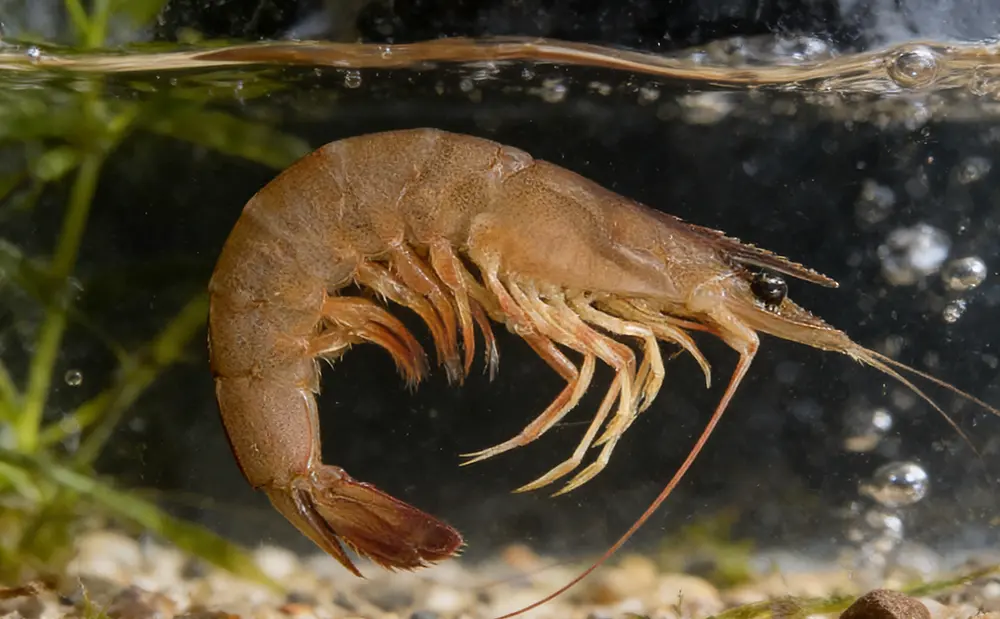 Comprehensive Study of the Giant Tiger Prawn (Penaeus monodon) in Indonesian Waters
Comprehensive Study of the Giant Tiger Prawn (Penaeus monodon) in Indonesian Waters
Oysters: Living Filters of the Ocean
Oysters: Living Filters of the Ocean
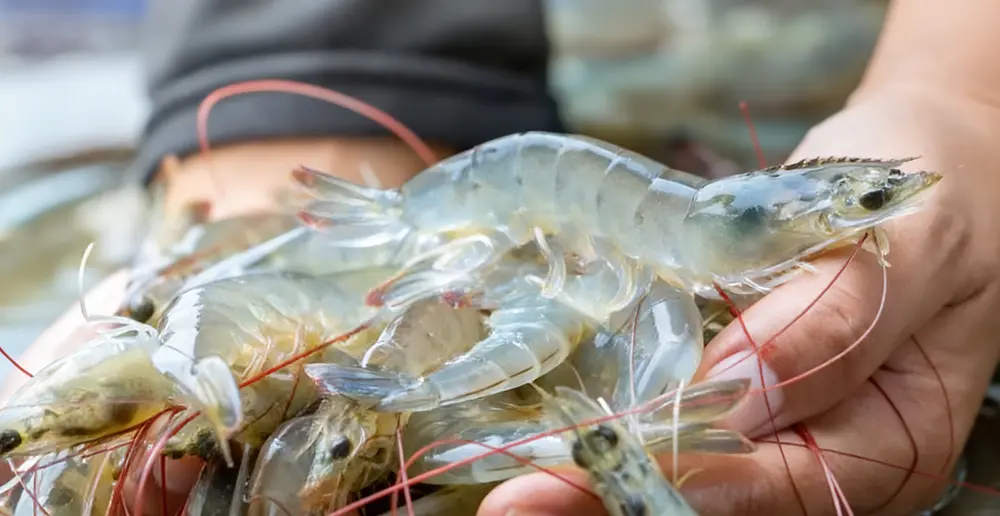 A Comprehensive Analysis of the Indonesian White Prawn (Penaeus merguiensis)
A Comprehensive Analysis of the Indonesian White Prawn (Penaeus merguiensis)
4Glass Catfish Unveiled: Morphological Traits, Daily Life, Ornamental Appeal, Strains, and Seasonal C
5Physical Characteristics of the Checkerboard Wrasse | Habits | Edible Value | Varieties | Seasonalit
6Red Cod| Rockfish | Rosefish: Biology and Sustainable Utilization of a Deep-Sea Delicacy
7Bluefin Tuna: Biology and Fisheries Value of a Tropical Oceanic Wanderer
8Moray eel | Eels—Muraenidae: The Secret Predators of the Abyss
9Physical Characteristics of Sea Bream | Habits | Edible Value | Species Overview
10Silver Cod Essentials: Form, Living Behavior, Taste, Types, and Peak Seasons